1. Meet face to face
- In person — the best option, because it also allows nonverbal communication. That makes it easier to understand each other and to clear up any misunderstandings quickly.
- On video — we usually work remotely, so meeting in person is not always possible. Zoom is a good alternative in that case, but remember: turn on your camera!
- By voice — not everyone will want to, or be able to, turn on a camera. Then you’re left with audio. You lose some nonverbal communication, but it’s still a better option than the last one on this list. And even if the other person leaves their camera off, it’s good if at least you turn yours on while giving feedback.
- On Slack — it seems like the easiest and quickest option. It only seems that way, because a whole lot of things can go wrong:
- without nonverbal cues, it’s easy to misinterpret a message and give it the wrong tone
- giving feedback this way, you often get no sign that you’ve been understood correctly
- there’s no room to clarify the context, add something, or explain
- and if someone does ask about those things, you end up spending time typing messages on Slack, when face to face you’d have settled it in a few minutes




2. Take care of the circumstances (time, space, and mood)
Make sure you both have time
- It’s best to give feedback right after something happens. If you go to someone and say, “Last Thursday, during refinement, there was this thing and I didn’t quite get what you meant,” you can’t count on them remembering the details of that meeting well enough to respond. Still, it’s worth taking a few minutes’ break before giving feedback.
- What if you’re in a meeting and want to give someone feedback? It’s usually not a good idea to do it in front of everyone. Not everybody is comfortable receiving feedback in front of others. Even positive feedback.
- If the person you want to give feedback to is clearly busy, in a hurry, or about to finish work, try to arrange a conversation at the next convenient time. That could be in fifteen minutes or even the next day. It isn’t ideal, but if you give feedback when someone has no time for it, you simply won’t be heard.

Find the right place
- It’s not a good idea to give feedback in a room full of people. Make sure you can talk privately.
- You need a feel for the right moment and place. Don’t do it, for example, when someone is about to go into the bathroom, even if the corridor is empty.
- That doesn’t mean you have to book a meeting room. Just try to make sure nobody interrupts you.
Keep it calm
- If you can see that someone is under strong emotions, wait a few minutes and give them time to cool down.
- If you can see that someone feels unwell, is tired, or is in a bad mood, you can arrange to talk the next day.
- Apply both of these points to yourself, too. Giving feedback in a bad mood can have the opposite effect to what you intended.

3. Ask whether they’re ready for feedback
Before giving anyone feedback, you should first make sure the person is open to it and will listen to you. That’s why it’s always worth starting with a question like:
I’d like to give you some feedback. Can we talk?
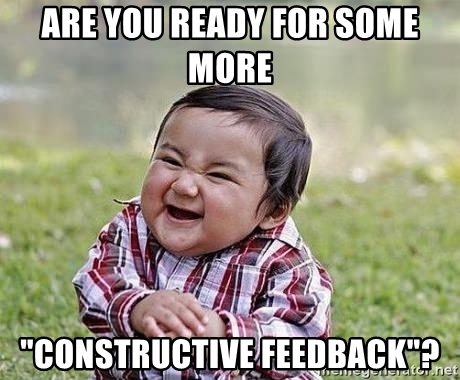
A question like this lets the other person know that feedback is coming, so they’re ready for it in a way. They’ll listen to you deliberately and be able to draw their own conclusions. By checking first, you also lower the chance of a misunderstanding.
4. Focus on facts
Once you’re giving feedback, focus on not judging the other person. Don’t talk about how, in your view, they did something wrong. Describe the situation and the behavior, and point to the effect of that behavior.

5. Paraphrase
Paraphrasing, putting what you heard into your own words, is a great technique for reaching mutual understanding. It doesn’t just help you understand each other; it also shows that you really heard what the other person had to say. Paraphrasing is a way to get to the other person’s need. How does that work with feedback?
If you’re giving feedback about something someone said, you can start by paraphrasing it:
Notice that here the feedback isn’t given directly, but through paraphrasing questions and a request. What will the effect be? Someone who simply criticized the tasks in one meeting will bring arguments to the next one, and that meeting may turn out to be much more productive.
When we don’t paraphrase, it’s harder to get to the heart of the matter, and frustration grows because both sides feel misunderstood.
If you receive feedback, paraphrase it too, to make sure you understood it correctly.